

Daily Joint Mobility Routine for Beginners: A Step-by-Step Plan
Last Updated: November 22, 2026
Quick Summary
A joint mobility routine is a short set of gentle movements done daily to keep joints moving well. A beginner routine can run about five minutes, covering the neck, shoulders, arms, spine, hips, ankles and knees with slow, comfortable motions.
- Consistency matters more than intensity, so a few minutes every day beats one long session each week.
- The full beginner sequence takes about eight to ten minutes and works from head to toe.
- The minimum five-minute routine uses five one-minute blocks with 30 seconds per movement.
- Stop any movement that causes sharp, sudden or lasting pain, and avoid bouncing or forcing range.
- See a doctor before starting if you have a diagnosed joint condition, recent injury or ongoing pain.
Table of Contents
- Why Daily Joint Mobility Matters for Your Joints
- What You Need Before You Start
- Mobility Exercises for Beginners: The Step-by-Step Sequence
- Your 5-Minute Daily Mobility Routine
- Mobility Exercises at Home: Modifications and Progressions
- Safety and Best Practices for Beginners
- Building a Daily Mobility Routine You Will Keep
- Frequently Asked Questions
Why Daily Joint Mobility Matters for Your Joints
A daily joint mobility routine is one of the simplest ways to keep your joints moving well. Gentle movement a few minutes each day helps keep stiff joints from getting stiffer.
Joints need movement to stay healthy. Cartilage gets its nutrients through fluid that moves in and out as you move. When you sit or stand still for long periods, that exchange slows down. Short, regular movement keeps things flowing.
Consistency matters more than intensity. A few minutes every day beats one long session each week.
- Daily movement helps maintain range of motion
- Short sessions are easier to keep up than long workouts
- Gentle mobility work suits most adults, including those over 40
What You Need Before You Start
You don't need any equipment to begin a daily joint mobility routine. A clear floor, a little space, and comfortable clothes are enough. A yoga mat or folded towel can make floor movements more comfortable.
Before you start, check a few basics:
- Space: An area about the size of a yoga mat
- Footwear: Go barefoot or wear supportive shoes
- Timing: Choose a time you can repeat each day, such as after waking up
- Water: Keep a glass nearby to stay hydrated
If you have a diagnosed joint condition, a recent injury, or ongoing pain, talk with your doctor before starting a new routine. Ask which movements are safe for you.
Mobility Exercises for Beginners: The Step-by-Step Sequence
This sequence runs head to toe in about eight to ten minutes and is built for someone on day one. Move slowly, stay inside a comfortable range, and never push through sharp pain. Breathe steadily throughout each movement. A simple pacing rule: inhale as you lengthen or open, exhale as you round, fold, or return. Aim for a smooth two- to three-second count per direction rather than rushing through repetitions.
If a movement pinches, clicks with pain, or feels unstable, stop and use the easier version listed under each block.
Neck and Shoulder Movements
Start at the top. These movements loosen the neck and upper back, which often feel tight after sitting at a desk.
- Neck half circles: Sit or stand tall. Slowly drop your right ear toward your right shoulder, then roll forward and across to the left. Keep the chin slightly tucked and stop if you feel pinching. Do 5 slow passes in each direction. Easier version: move only from ear to shoulder and back, skipping the full roll.
- Shoulder rolls: Lift your shoulders toward your ears, roll them back and down. Do 10 backward rolls, then 10 forward. Keep the arms relaxed and let the shoulder blades glide rather than forcing them.
- Arm circles: Extend your arms to the sides at shoulder height and make small circles, gradually making them bigger. Do 10 circles each direction. Easier version: keep the arms lower, around hip height, and make smaller circles.
Watch out: Neck rolls done fast or taken past a comfortable end range are a common cause of next-day stiffness. Slow down and shorten the range before you add repetitions.
Spine and Hip Movements
Next, move through the middle of your body. These movements help your spine and hips feel more open.
- Cat-cow stretch: On hands and knees, arch your back up as you exhale, then let it sag as you inhale. Move one vertebra at a time and pause briefly at each end. Repeat 8 times. Easier version: do the same motion seated in a sturdy chair with hands on your thighs.
- Lying spine twist: Lie on your back, bring your knees to one side, and let them fall gently. Keep both shoulders down and breathe into the stretch. Hold for 20 seconds, then switch sides. Easier version: place a pillow under the knees or between them, and reduce the twist to a small, comfortable angle.
- Hip circles: Stand with feet hip-width apart, hands on hips. Move your hips in slow circles as if drawing a circle with your tailbone. Do 8 circles each direction. Easier version: hold a counter or chair back with one hand for balance, or do the circles seated.
Ankle and Knee Movements
Finish with the lower body. Healthy ankles and knees support every step you take.
- Ankle circles: Lift one foot and rotate the ankle slowly, tracing a full circle. Do 10 circles each way, then switch feet. Easier version: keep the toes on the floor and rotate from the heel, or do the circles seated with the leg extended.
- Heel lifts: Stand tall and rise onto your toes, then lower slowly over a two-second count. Repeat 10 times. Easier version: hold a wall or counter for support, or do the lifts seated by pressing through the balls of the feet.
- Gentle knee bends: Bend your knees slightly, keeping them over your toes, and hold for 5 seconds, then rise. Repeat 6 times. Easier version: reduce the depth to a quarter bend and hold a chair back for balance.
Between blocks, take one slow breath in and out and reset your posture. That ten-second pause is part of the routine, not a break from it. If you are brand new, run through the sequence once and stop there; add a second round only after a week of consistent, comfortable practice.
Your 5-Minute Daily Mobility Routine
This short routine takes about five minutes and is the minimum version of the full sequence. Use it on days when you have limited time, when you are traveling, or when you are easing back in after a break. It covers the main joints without requiring a long session. Set a timer so you are not watching the clock, and move at a steady pace with relaxed breathing.
- 0:00 to 1:00, Neck and shoulders: 30 seconds of slow neck half circles (about 3 each direction), then 30 seconds of shoulder rolls (about 8 backward, 8 forward).
- 1:00 to 2:00, Arms and spine: 30 seconds of small arm circles each direction, then 30 seconds of cat-cow at a slow, even pace (about 6 to 8 reps).
- 2:00 to 3:00, Spine twist: Lying spine twist, 30 seconds per side. Breathe out as the knees settle and keep both shoulders down.
- 3:00 to 4:00, Hips and ankles: 30 seconds of hip circles each direction, then 30 seconds of ankle circles (about 15 seconds per foot).
- 4:00 to 5:00, Lower body and close: 30 seconds of heel lifts (about 10 slow reps), then 30 seconds of standing breathing with your arms relaxed at your sides.
Transitions matter as much as the movements. Move from one block to the next without rushing, and take one full breath between blocks. If you finish early, use the extra seconds to slow down rather than add repetitions.
Variations for different schedules and needs:
- Morning version: Do the routine after you get out of bed but before coffee, when joints tend to feel stiffest. Keep the range smaller and let the movements wake you up.
- Desk-break version: Do the neck, shoulder, arm, and hip circles standing beside your desk, and skip the floor work. Two minutes is enough to break up a long sitting block.
- Pre-workout version: Run the full five minutes as a warm-up before walking, lifting, or a sport, then add a few larger arm circles and hip circles once you feel warm.
- Seated version: Do every movement from a sturdy chair, including the spine twist and ankle circles, for days when getting to the floor is not practical.
Over time, you can repeat the routine twice a day if it feels good, but keep the five-minute version as your baseline so a busy day never becomes a zero day. A common pattern is to do the short version on weekdays and the longer step-by-step sequence on a weekend day when you have more time.
The article breaks the minimum routine into five one-minute blocks, each with its movements and timing.
| Time block | Focus | Movements |
|---|---|---|
| 0:00 to 1:00 | Neck and shoulders | Neck half circles and shoulder rolls, 30 seconds each |
| 1:00 to 2:00 | Arms and spine | Arm circles and cat-cow, 30 seconds each |
| 2:00 to 3:00 | Spine twist | Lying spine twist, 30 seconds per side |
| 3:00 to 4:00 | Hips and ankles | Hip circles and ankle circles, 30 seconds each |
| 4:00 to 5:00 | Lower body and close | Heel lifts and standing breathing, 30 seconds each |
Mobility Exercises at Home: Modifications and Progressions
Every body is different. These changes can make the routine easier or more challenging.
Making it easier:
- Do cat-cow while seated in a sturdy chair
- Support your head with a pillow during the spine twist
- Hold onto a wall or counter during heel lifts and knee bends
- Reduce the number of repetitions
Making it more challenging:
- Increase the size of your arm circles
- Hold the spine twist longer, up to 30 seconds
- Add a slow squat to the hip movements
- Try a single-leg balance while doing ankle circles
Progress slowly. Add one repetition or a few extra seconds each week, but only if the movement feels comfortable.
Safety and Best Practices for Beginners
Mobility work should feel good. Some mild stretching is normal, but sharp pain is a signal to stop.
- Stop any movement that causes sharp, sudden, or lasting pain
- Avoid bouncing or forcing your range of motion
- Keep your breathing slow and steady
- Warm up gently before the routine if your joints feel stiff in the morning
- Stay hydrated throughout the day
Watch out: Moving too fast or too far on your first day can leave joints sore. Start with fewer repetitions than listed here and build up slowly.
Seek professional advice if you notice swelling, redness, warmth around a joint, numbness, or pain that lasts more than a few days. A doctor or physical therapist can help you adjust the routine to your needs.
Some people also ask their doctor about supplements. You can learn more about our Glucosamine Chondroitin with MSM for joint comfort and mobility support. Always check with a healthcare professional first if you take other medications or have a medical condition.

Building a Daily Mobility Routine You Will Keep
The best routine is the one you actually do. Attach your mobility practice to something you already do every day, such as brushing your teeth or making coffee.
Keep track of how you feel. A simple note on your phone each evening can show progress.
Be realistic about results. Mobility work improves how your joints move, but it works alongside other habits like walking, strength training, and good sleep. Expect steady gains rather than overnight changes.
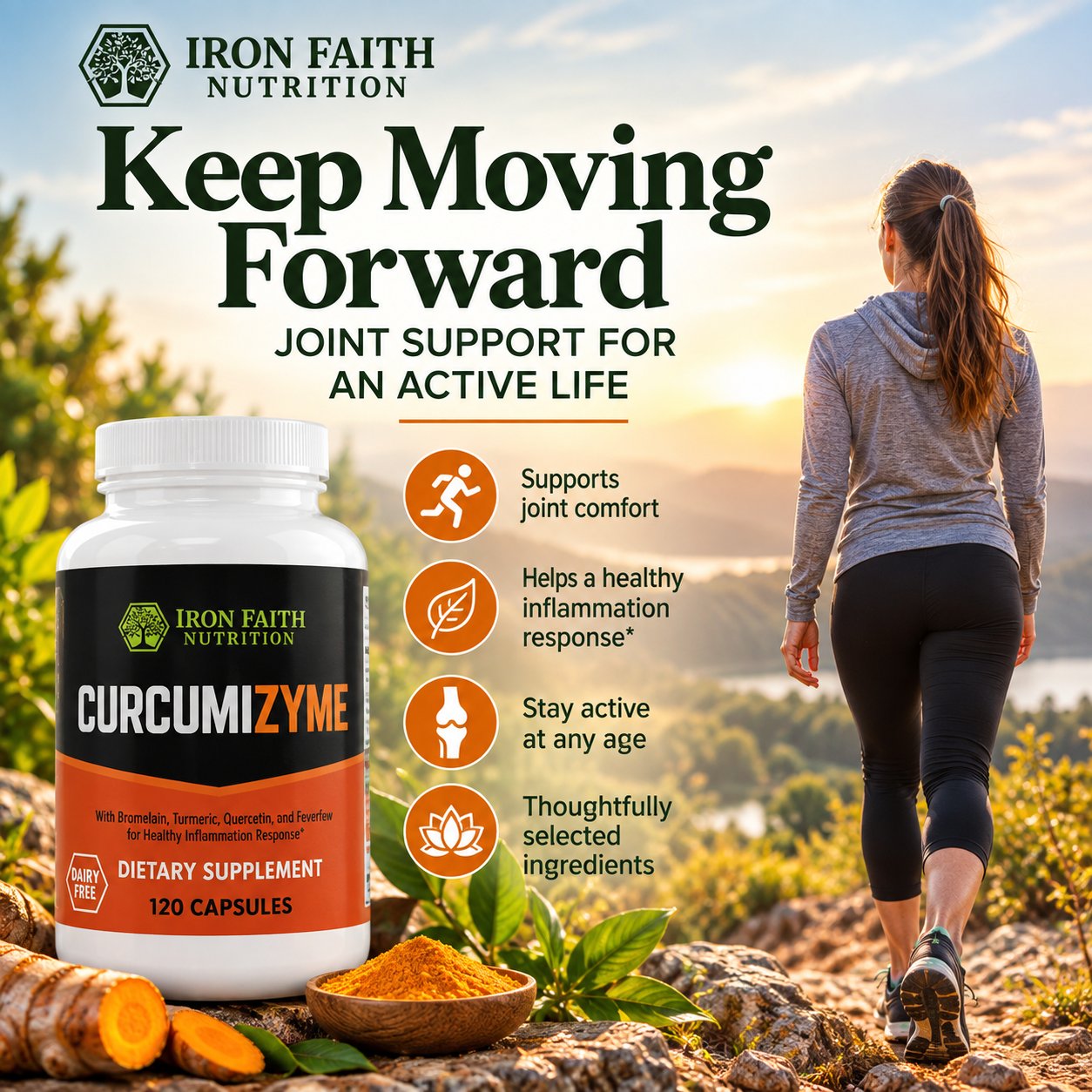
If joint discomfort is part of your daily life, you can also explore Curcumizyme, a curcumin and enzyme supplement made for inflammation and joint support. For more joint-focused options, browse the Joint And Bones collection.

Frequently Asked Questions
What is a good daily mobility routine for beginners?
A good beginner routine covers the neck, shoulders, spine, hips, and ankles with slow, controlled movements. Start with about five minutes a day, moving through each area once or twice. Keep every movement within a comfortable range, breathe steadily, and stop any motion that causes sharp pain. Consistency matters more than intensity, so a short routine done most days will serve you better than a long one done rarely.
How long should a beginner mobility routine take?
Most beginners do well with a routine of five to ten minutes. A five-minute version works for busy mornings, while ten minutes gives you time to move slowly through each exercise and hold stretches longer. Begin with the shorter version and extend the time gradually as movements feel easier. Track how you feel over several weeks rather than expecting quick changes.
Can I do joint mobility exercises every day?
Yes, gentle joint mobility work is generally suitable for daily practice because it uses light, controlled movement rather than heavy loading. Vary the focus across days if you want, such as emphasizing hips one day and shoulders the next. If an area feels sore for more than a day or two after your routine, reduce the range or frequency. Persistent or worsening joint pain should be evaluated by a healthcare professional.
When should I stop a mobility exercise?
Stop any movement that causes sharp, stabbing, or joint-catching pain, numbness, or tingling. Mild stretching sensation is normal, but pain should not increase as you continue. If you feel dizzy, short of breath, or notice swelling, stop and rest. For new or ongoing joint symptoms, talk with a doctor or physical therapist before continuing the routine.