

Natural Supplements vs Medication for Heart Health
Last Updated: November 5, 2026
Quick Summary
Natural supplements can support heart health, but they do not replace prescribed medication for heart disease, high blood pressure, or high cholesterol. Many are studied for modest effects on specific markers, while medications are tested for defined clinical outcomes. Supplements work best alongside diet, physical activity, sleep, and regular checkups with a clinician.
- Treating natural supplements as automatically safe is a common and risky mistake.
- Supplements can interact with blood thinners, blood pressure drugs, and other prescriptions.
- Omega-3 is among the most studied supplements, but high doses can raise bleeding risk with anticoagulants.
- CoQ10 evidence for heart outcomes is mixed, so it is best described as supportive rather than proven.
- Bring a written list of all medications and supplements to your clinician before starting anything new.
Table of Contents
- What Natural Supplements Can and Cannot Do for Heart Health
- Omega-3 Supplements for Heart Health: What the Evidence Shows
- CoQ10 and Other Nutrients: How They Compare
- Supplements for Heart Health and Blood Pressure: Herbal and Nitric Oxide Options
- Side-by-Side Comparison of Iron Faith Nutrition Heart-Support Products
- Medication Interactions, Dosing, and Who Should Avoid Supplements
- Checking Label Quality and Talking With Your Doctor Before You Start
- Frequently Asked Questions
What Natural Supplements Can and Cannot Do for Heart Health
Natural supplements can support heart health, but they do not replace prescribed medication for heart disease, high blood pressure, or high cholesterol. The most useful starting point is knowing where that support ends. Many supplements are studied for modest effects on specific markers, while medications are tested for defined clinical outcomes.
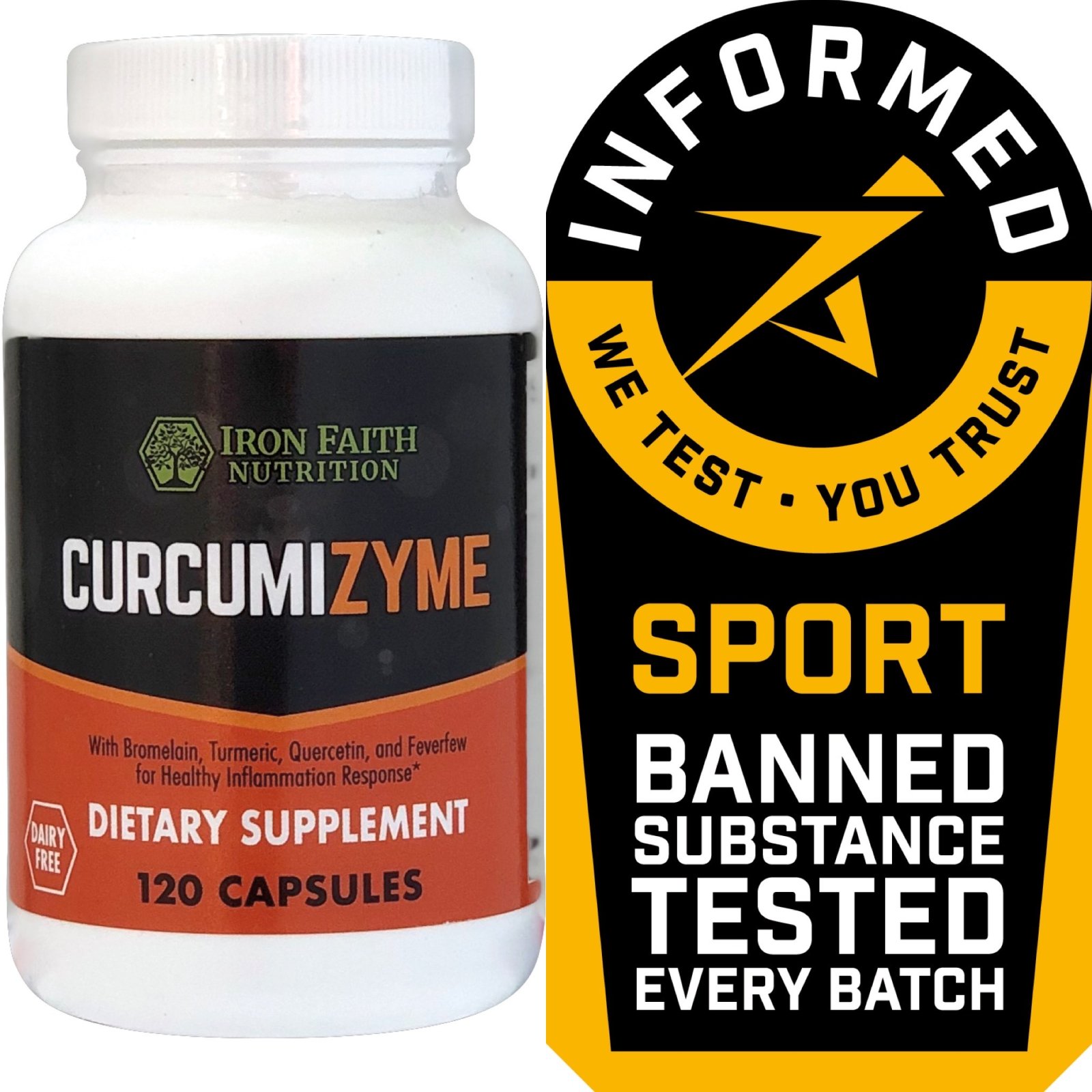
A common mistake is treating "natural" as a synonym for "safe for everyone." Supplements can interact with blood thinners, blood pressure drugs, and other prescriptions, so the question is never only whether an ingredient is natural. The question is whether it fits your health status and current medications.
Iron Faith Nutrition's view is that supplements work best as one part of a plan that includes diet, physical activity, sleep, and regular checkups with a clinician.
Omega-3 Supplements for Heart Health: What the Evidence Shows
Omega-3 fatty acids are the supplement most often studied for heart health, and they are one of the few categories where the research is extensive enough to discuss in some detail. Evidence from National Institutes of Health Office of Dietary Supplements fact sheet on omega-3 fatty acids describes EPA and DHA as the forms most closely linked to cardiovascular effects, and results vary by dose and by the health condition being studied.
Results differ by population. Some trials show benefits in people with existing heart disease, while others find little effect in healthy adults. Food sources such as fatty fish provide omega-3s alongside other nutrients, which is worth weighing against a capsule.
Watch out: high-dose omega-3 products can increase bleeding risk in people taking anticoagulants, so check with a prescriber before combining the two.
Best for: adults who eat little fish and have been advised by a clinician to increase omega-3 intake. Skip if: you take a blood thinner and have not discussed the supplement with your doctor.
CoQ10 and Other Nutrients: How They Compare
Coenzyme Q10 is a compound involved in cellular energy production, and it is widely used as a supplement. Iron Faith Nutrition's CoQ10 (Ubiquinone) - Cellular Energy, Heart & Antioxidant Support (30 Caps) is one option for people who want a daily CoQ10 product. The evidence for CoQ10 and heart outcomes is mixed, so it is more accurate to describe it as a supportive nutrient than a proven treatment.
Other nutrients, including magnesium, potassium, and vitamin K2, are discussed in the research for their roles in blood pressure regulation and vascular function. The strength of that evidence varies, and no single nutrient should be treated as a replacement for a prescribed therapy.
| Nutrient | Commonly studied for | Evidence strength | Key caution |
|---|---|---|---|
| Omega-3 (EPA/DHA) | Triglycerides, heart disease risk | Moderate to substantial | Bleeding risk with anticoagulants |
| CoQ10 | Cellular energy, statin-related muscle complaints | Mixed | May interact with warfarin |
| Magnesium | Blood pressure support | Moderate | Kidney disease can affect clearance |
Supplements for Heart Health and Blood Pressure: Herbal and Nitric Oxide Options
Many people searching for natural supplements for heart health are specifically interested in blood pressure. Herbal blends and nitric oxide precursors are common in this category, but the research behind them is often limited or drawn from small studies.
Iron Faith Nutrition offers Seven Flower Extract, 100 pills, a traditional herbal blend positioned for healthy blood pressure already in the normal range. It is a dietary supplement and is not a substitute for blood pressure medication. Beetroot - Nitric Oxide, Circulation & Endurance (60 Caps) supplies dietary nitrates that the body can convert to nitric oxide, and L-Arginine 500 mg provides an amino acid used in the nitric oxide pathway. Anyone using blood pressure medication, nitrates, or PDE-5 inhibitors should speak with a clinician before using L-arginine.
A common mistake is stacking several nitric oxide products without checking whether the combined effect is safe. Blood pressure can drop too far when these products are combined with prescription drugs.
Side-by-Side Comparison of Iron Faith Nutrition Heart-Support Products
Iron Faith Nutrition's catalog includes several products that people consider for cardiovascular support. The table below summarizes what each product is positioned for, based on its listing, so you can compare them directly.
| Product | Listed price | Positioned for | Clinician check needed if |
|---|---|---|---|
| CoQ10 (Ubiquinone), 30 caps | $23.95 | Daily cellular energy and heart support | Taking statins, blood pressure, or heart medications |
| Seven Flower Extract, 100 pills | $20.95 | Healthy blood pressure already in the normal range | Taking any blood pressure or blood thinning medication |
| Beetroot, 60 caps | $20.95 | Circulation and nitric oxide support | Taking medications or managing a health condition |
| Ginkgo Biloba + Ginseng | $25.95 | Focus, circulation, and steady energy | Taking blood thinners or other prescriptions |
| L-Arginine 500 mg, 100 veg caps | $19.95 | Nitric oxide and circulation support | Using nitrates, PDE-5 inhibitors, or blood pressure drugs |
Prices are as listed on the product pages. Confirm current pricing on the product page before ordering.
Medication Interactions, Dosing, and Who Should Avoid Supplements
Medication interactions are the most important safety issue in this topic, and general advice to "check with your doctor" is not enough to act on. What helps is knowing which supplement families collide with which drug classes, why the collision happens, and what sign would tell you something is wrong.
Blood thinners and antiplatelets. Warfarin, apixaban, rivaroxaban, dabigatran, clopidogrel, and daily aspirin all change how blood clots. Several supplements push in the same direction. High-dose fish oil, ginkgo biloba, ginseng, garlic extracts, and vitamin E can add to bleeding risk, and CoQ10 has a structural similarity to vitamin K that can blunt warfarin's effect. The practical signal is unusual bruising, nosebleeds that take longer to stop, dark stools, or blood in urine.
CoQ10 (Ubiquinone) – Cellular Energy, Heart & Antioxidant Support (30 Caps) →
Blood pressure medicines. Nitrates (nitroglycerin, isosorbide), PDE-5 inhibitors (sildenafil, tadalafil), and alpha-blockers all lower blood pressure. L-arginine, beetroot, and other nitric oxide boosters work through the same pathway, so stacking them can drop pressure further than intended. The signal is lightheadedness on standing, a racing pulse, or fainting. Anyone on any of these drugs should treat nitric oxide products as a conversation with a prescriber, not a self-serve add-on.
Cholesterol-lowering drugs. Statins are the common pairing here. CoQ10 is often discussed alongside statins because statins reduce the body's own CoQ10 production, and some people report muscle complaints; the evidence that supplementing relieves those complaints is mixed, but the interaction itself is well recognized.
Kidney and liver conditions.
Who should pause before starting. Pregnant or nursing women, and anyone with a health condition or taking prescription medication, should ask a professional before starting a supplement.
Dosing and tracking. Stick to the amount on the label unless a clinician gives different instructions, and keep a simple log of what you take, the dose, and the time. Measurable outcomes, home blood pressure readings taken the same way each time, a lipid panel, or a note on how you feel, give you and your doctor something concrete to review after several weeks. Without a baseline, there is nothing to compare against, and "I think it's helping" is not a finding.
Checking Label Quality and Talking With Your Doctor Before You Start
A supplement label is a short document with a lot of information packed into it, and most of the useful signals are in three places: the Supplement Facts panel, the other-ingredients list, and the small print around the claims.
Read the Supplement Facts panel first. Check the serving size against how many servings the container holds, a bottle that looks like a month's supply can be a two-week supply if the serving is two capsules. Then look at the amount per serving for each active ingredient. A blend listed as a single milligram total with the individual herbs hidden underneath tells you nothing about how much of each you are getting, which is a common way to make a small amount of an expensive ingredient look larger than it is.
Check the ingredient form. The same nutrient can appear in forms with different absorption. Magnesium oxide and magnesium citrate behave differently; ubiquinone and ubiquinol are different forms of CoQ10; fish oil labels should state EPA and DHA amounts separately rather than only "fish oil 1,000 mg." If the form is not stated, that is a signal about how much care went into the product.
Look at the other-ingredients list. Fillers, binders, and flow agents are normal in capsule manufacturing, but the list should be short and recognizable. Proprietary blends, added stimulants, and undisclosed herbal mixes are the items to slow down on, especially if you take prescription medication.
Understand what third-party seals mean. USP Verified supplement program and similar programs verify that a product contains the ingredients and amounts on the label, that it does not contain harmful levels of contaminants, and that it will break down in the body as expected. That is a meaningful check on manufacturing quality. It does not verify that the product works for any health condition, and a product without a seal is not automatically bad, it just means the manufacturer has not submitted to that outside check.
Watch the claim language. Structure-function claims such as "supports heart health" are allowed on dietary supplements without FDA pre-approval, and they must be paired with the disclaimer that the statement has not been evaluated by the FDA and the product is not intended to diagnose, treat, cure, or prevent any disease. A label that implies disease treatment without that framing is a warning sign.
Bring a written list to your appointment. Include every prescription, over-the-counter drug, and supplement, with doses. Ask three specific questions: whether any product could interact with your prescriptions, what signs of a problem to watch for, and whether a blood test would be useful to check a level before you start. A baseline panel turns a vague hope into something you can actually measure.
Iron Faith Nutrition products are dietary supplements, not medications, and the Food and Drug Administration has not evaluated these statements. These products are not intended to diagnose, treat, cure, or prevent any disease.
Frequently Asked Questions
What is the best natural supplement for the heart?
No single supplement is best for everyone, and none replaces prescribed heart or blood pressure medication. Coenzyme Q10 (CoQ10) plays a role in cellular energy production, and Iron Faith Nutrition's CoQ10 (Ubiquinone) 200 mg, 30 capsules, is priced at $23.95. Whether any of them fits depends on your health history, current medications, and a conversation with your doctor.
How can I improve my heart health naturally?
Daily habits such as regular movement, a diet rich in vegetables, fruit, whole grains, and fish, adequate sleep, and stress management make the largest difference for most adults. Supplements can complement these habits but work best as an addition to them. Track your blood pressure and cholesterol with your clinician, since these numbers show whether your efforts are working.
Do natural supplements interact with heart medications?
They can. Ingredients such as L-Arginine are generally advised against for people using blood pressure medications, nitrates, or PDE-5 inhibitors, and CoQ10 is often discussed in the context of people taking statin medications. Herbal blends like Seven Flower Extract should not be used to replace prescribed blood pressure medication. Bring a complete list of everything you take, including supplements, to your doctor or pharmacist before starting anything new.
How can I check whether a heart supplement is high quality?
Look for a Supplement Facts panel that lists each ingredient and its amount, a clear lot number, and a manufacturer you can contact. Independent third-party testing seals, such as USP or NSF, indicate that a product was checked for identity and contaminants, though they are not a guarantee of benefit. Compare the labeled dose to the amounts used in research, and be cautious of products that make disease-treatment claims.